Cloud-Native ERP Platform
The client's day-to-day operations were spread across a patchwork of disconnected tools and manual processes, with no single source of truth for business data. In practice, that meant the same piece of information could exist in more than one place at once, with no guarantee the copies agreed and no built-in way to know which version was current. That uncertainty sat underneath everyday work rather than showing up only in rare edge cases, since almost any task that touched more than one part of the business ran into it.
Each function operated in its own silo, and the workflows that connected those functions depended on manual handoffs to bridge the gaps between them. Every one of those handoffs was a place where a mistake could be introduced, and because the tools weren't built to work together, there was no systematic way to catch those errors before they propagated further. The same fragmentation that made the day-to-day error-prone also made it hard to scale: extending or growing any one function meant working around the limits of whichever standalone tool supported it, rather than building on a shared foundation.
What the client needed, then, was not just another tool added to the mix but a genuinely unified ERP platform: one authoritative place for business data and workflows. That requirement came with a constraint of its own: the platform had to be able to grow module by module as the business's needs expanded, without hardening into a single tangled monolith that would eventually become as unwieldy and hard to change as the fragmented set of tools it was meant to replace.
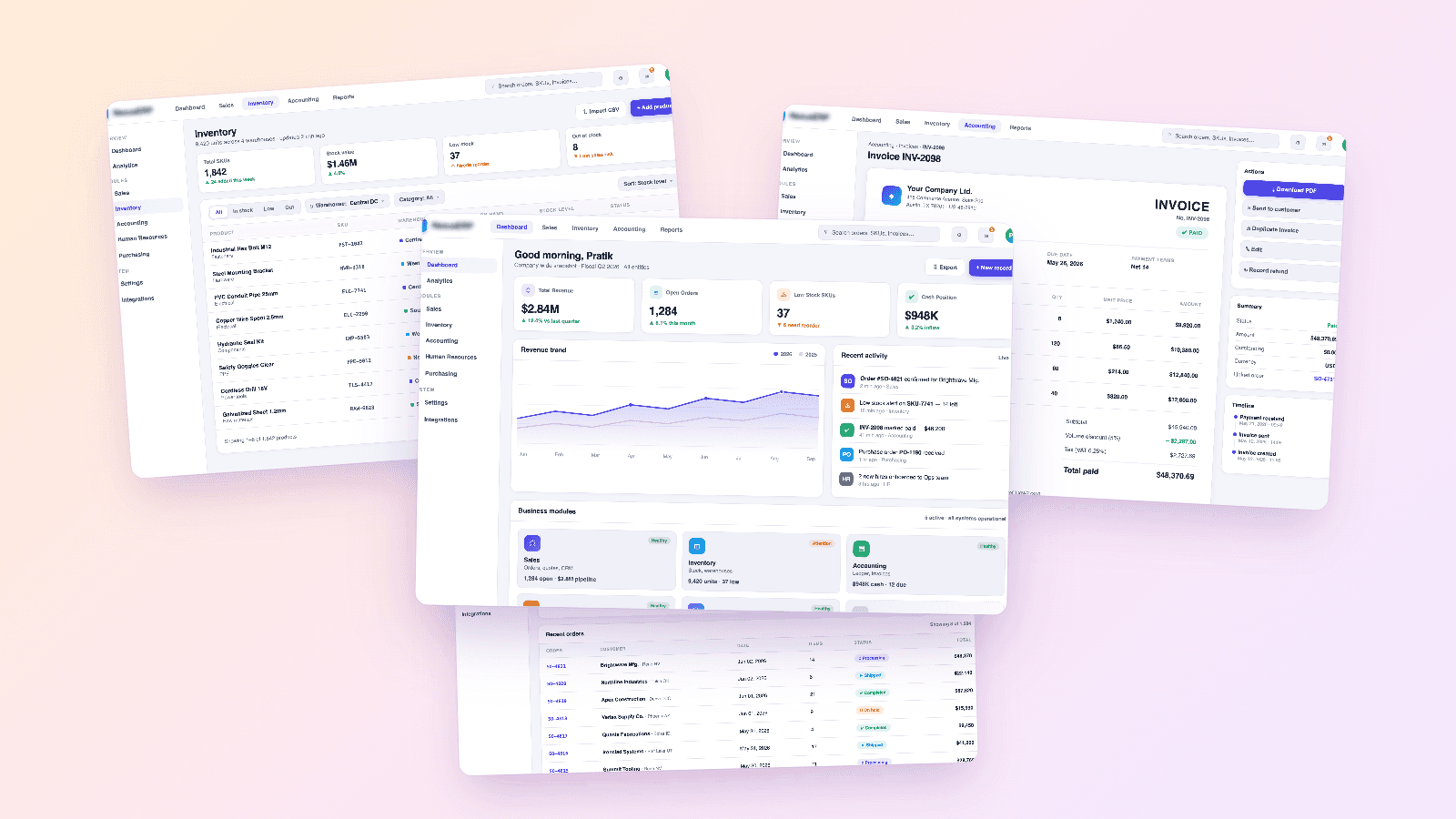
Unified ERP Platform
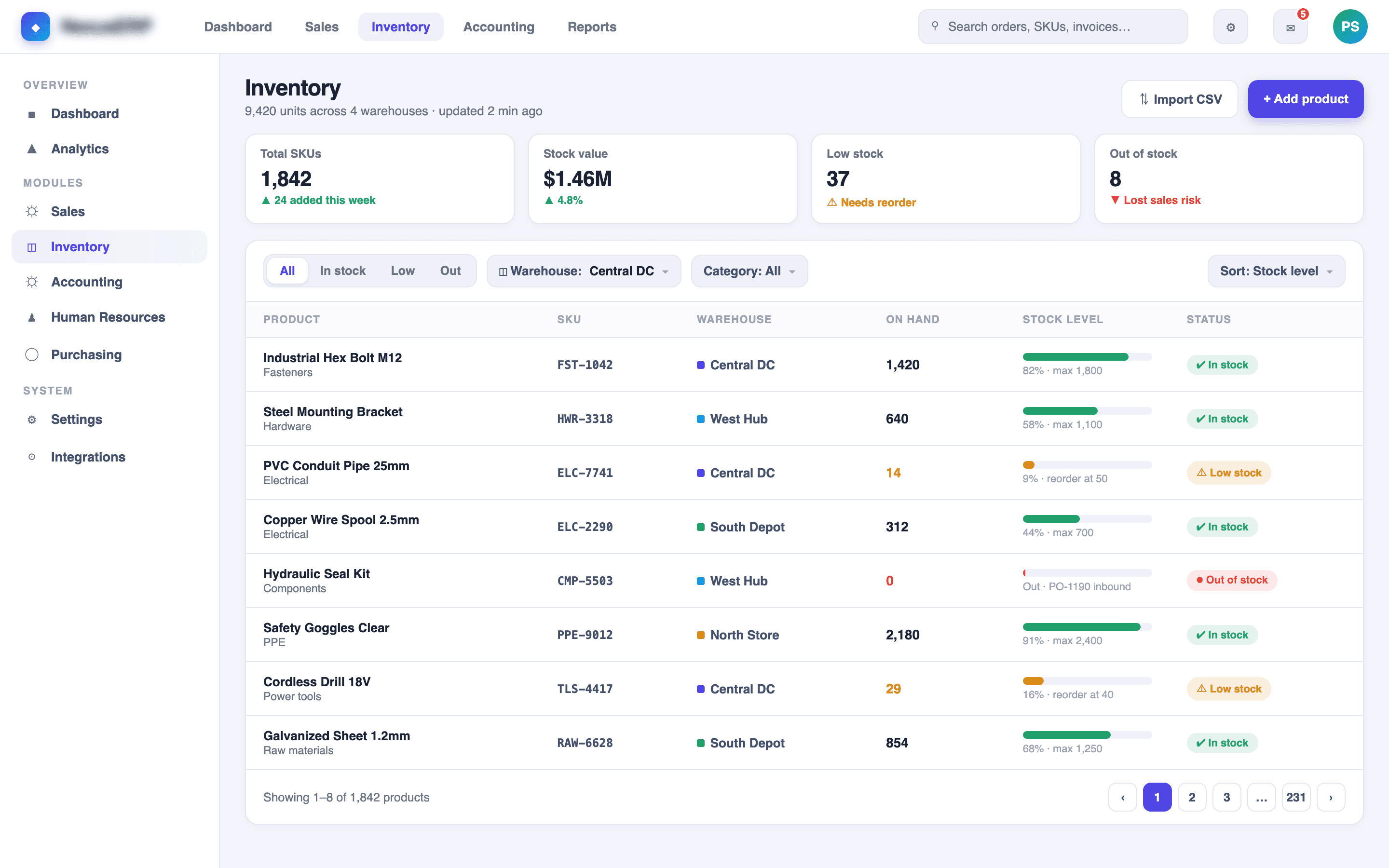
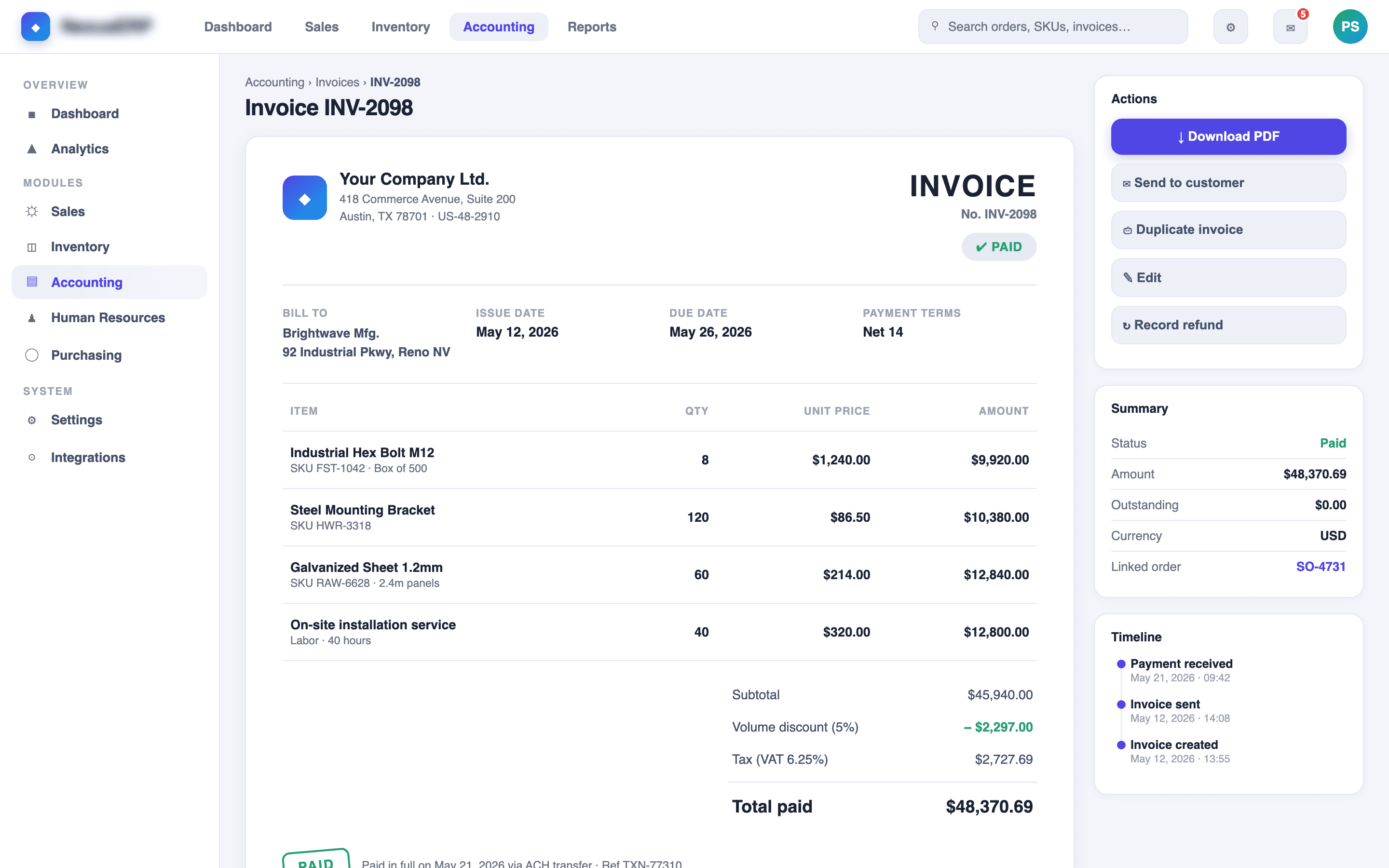
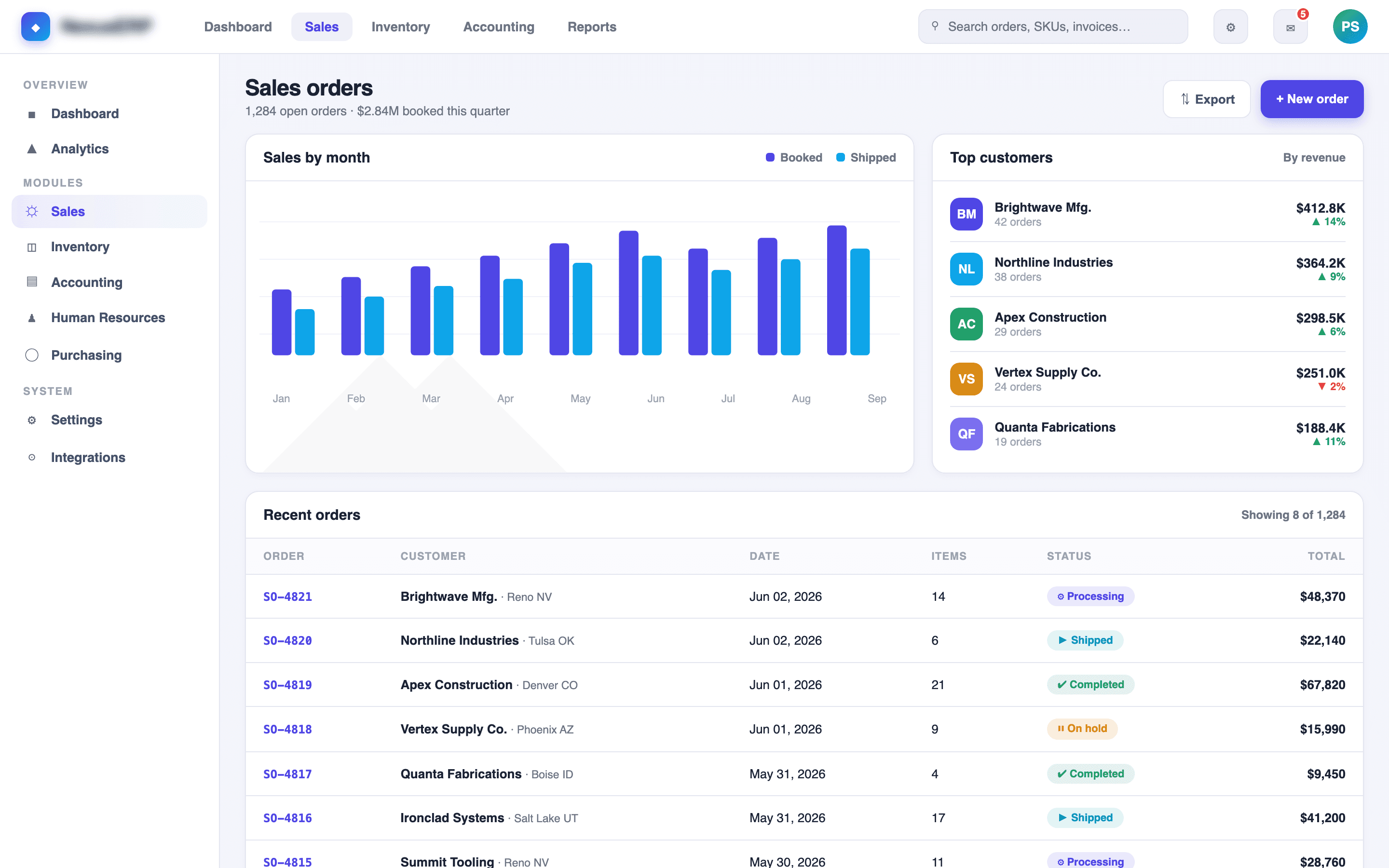
Consolidates core business operations under one roof, replacing scattered tools.
Modular Architecture
Each business area is its own well-defined module that slots in without destabilizing the rest.
Shared Data Models
Information flows cleanly across modules instead of being re-entered.
Role-Aware Interfaces
Tailored to how different teams actually work in the system.
Business Logic APIs
Backend APIs that enforce complex business logic and keep modules consistent.
The architecture was shaped by four decisions made early, each intended to keep the platform easy to extend rather than locking it into a fixed shape.
- The backend was organized around business domains rather than a single undifferentiated codebase, so that each module could own its own logic and data. Structuring it this way meant a new module could be added, or an existing one changed, without having to touch the internals of unrelated modules: which kept the risk of any one change destabilizing the rest of the platform low even as the number of modules grew.
- Business-logic services were kept clearly separate from the presentation layer rather than tightly coupled to it, so the two could be iterated on independently. That separation meant changes to how the platform processed or handled data didn't force changes to the interface, and changes to the interface didn't require touching the underlying services, letting each side move at its own pace as the platform evolved.
- Rather than letting each module implement its own version of common functionality, the team built reusable shared components and defined data contracts that modules were expected to follow. Standardizing on shared building blocks kept behavior consistent for users regardless of which module they were in, and gave the team a single place to update shared functionality instead of having to track down and fix every module's own version separately.
- The platform was designed API-first and built on cloud-native foundations from the outset, rather than having APIs added on after the fact. That choice was made with an eye toward the platform's future: an API-first, cloud-native design gives the system room to scale as usage grows and a natural way to integrate with external systems as the client's needs call for it over time.
- The scattered tools and the manual handoffs that used to connect them have been replaced by one unified platform, so teams that previously worked in separate systems now share the same data and the same workflows. Work that used to require someone to manually carry information from one tool to another now moves through the platform directly, which removes both the extra effort and the errors that manual handoffs tended to introduce.
- Because the backend is organized into discrete, domain-driven modules, the client can extend the platform by adding one capability at a time rather than undertaking a large, disruptive overhaul each time a need arises. Each new module can be built and rolled out on its own, which gives the client control over the pace and order of the system's growth going forward.
- With shared data contracts in place across modules, business data now has one consistent model instead of being entered separately into whichever tool a given team happened to use, which cuts down on the duplicate data entry that fragmentation used to require. That same consistency was architected with growth in mind, so the data model is built to keep working as the business (and the volume of data moving through the platform) continues to scale.
Discovery
Understand the problem, the users, and the real constraints before any design work starts.
Design
Architecture and UX decisions made deliberately, before a line of production code is written.
Build
Iterative development with regular check-ins, so direction can be corrected early and cheaply.
Test
QA and hardening against real-world edge cases before anything reaches production.
Ship & Support
Launch, then stay involved: monitoring, fixes, and iteration as the product keeps growing.