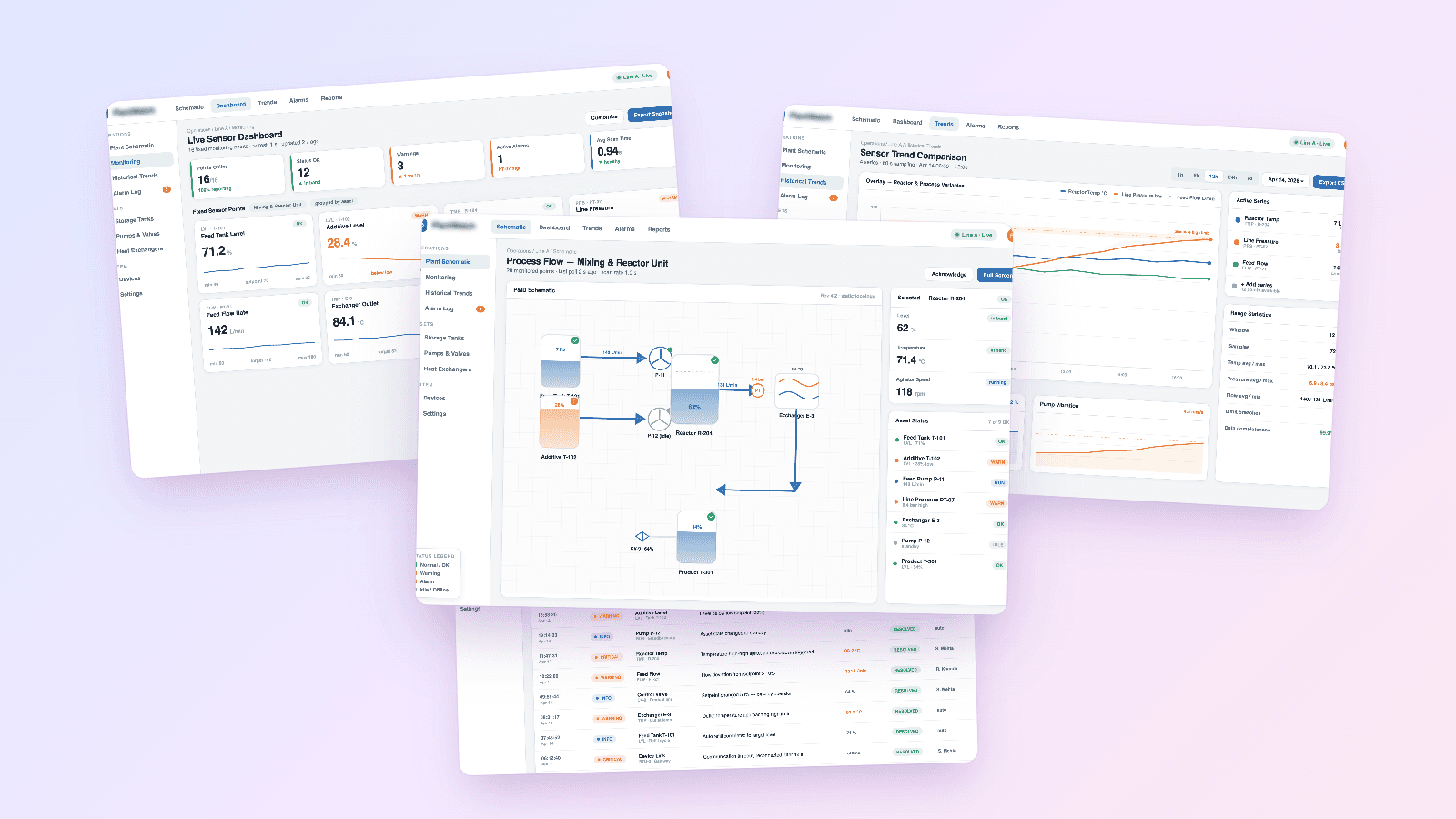
Real-Time IoT SCADA Platform
Most industrial monitoring systems are built around a single assumption: the plant layout is fixed. Every asset on the floor, every sensor feeding it, and every process flow connecting them gets encoded directly into the application itself, so the software effectively memorizes one specific version of the facility. That works until something on the floor changes (a machine gets added, a sensor gets relocated, a process gets rerouted) at which point closing the gap between the code and the real plant requires an engineering cycle: a developer opens the codebase, makes the change, tests it, and ships a new release before the system reflects reality again.
For the client, that dependency was the actual problem to solve, not a detail to work around. The people who understand how a plant is laid out and how its processes flow are domain users, not the engineering team, and every layout change that had to wait on a code change was friction the business felt directly. What they needed was a SCADA platform where defining and adjusting assets and process flows was something domain users could do themselves, without touching source code or waiting on a release.
That requirement could not come at the expense of the other half of what a SCADA system exists to do: stream live telemetry off the plant floor reliably and at scale. A monitoring platform that is flexible but slow, or configurable but unreliable under real load, fails at its job just as badly as one that is fast but rigid. The engineering challenge was to combine a configurable, data-driven model of the plant with a backend fast enough to keep up with real-time industrial data: two properties that naturally pull against each other, since the abstraction that makes a system flexible is often the same abstraction that slows it down.
Configurable Asset Engine
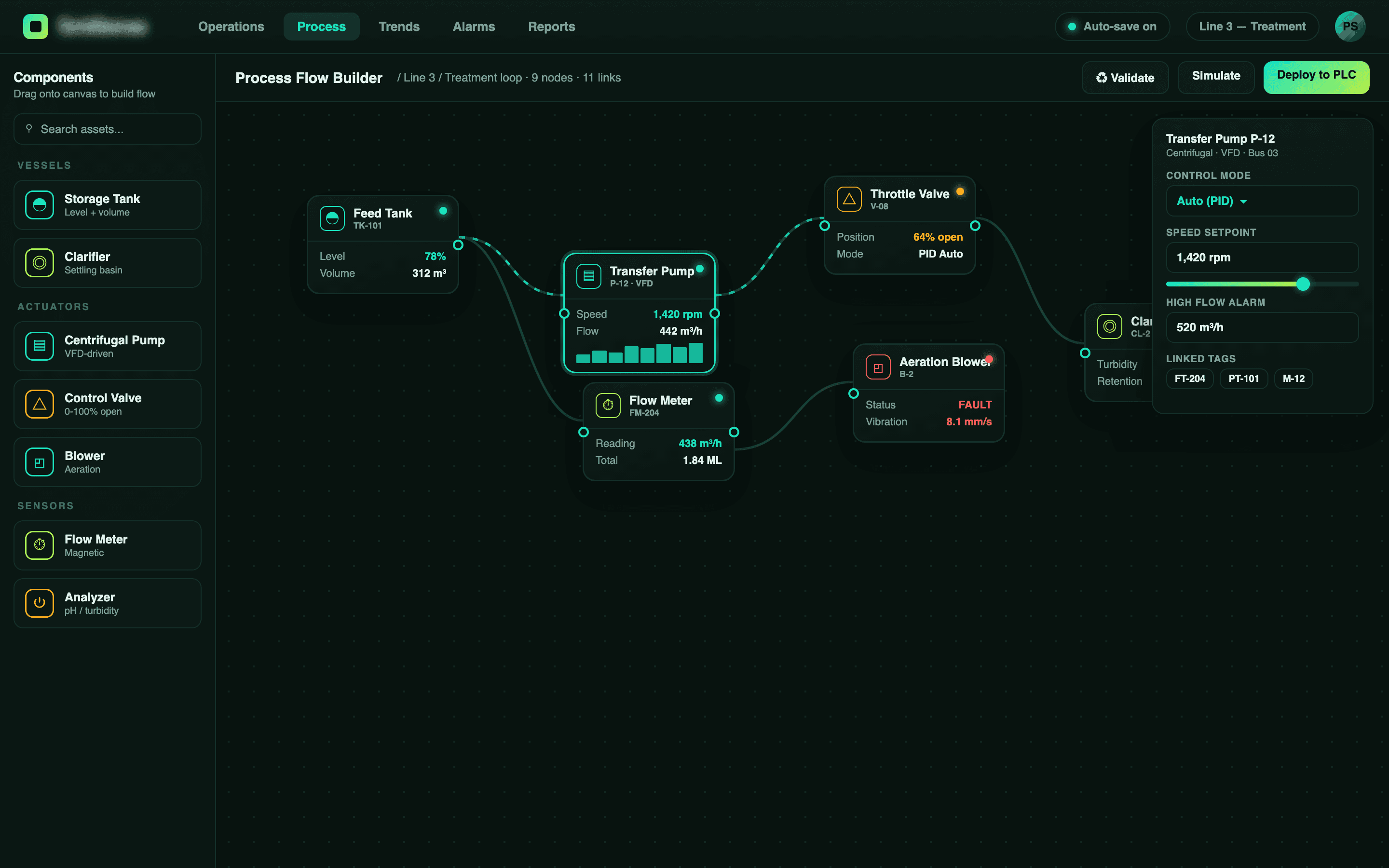
Users model their own equipment, tags, and process flows through configuration, not hard-coded layouts.
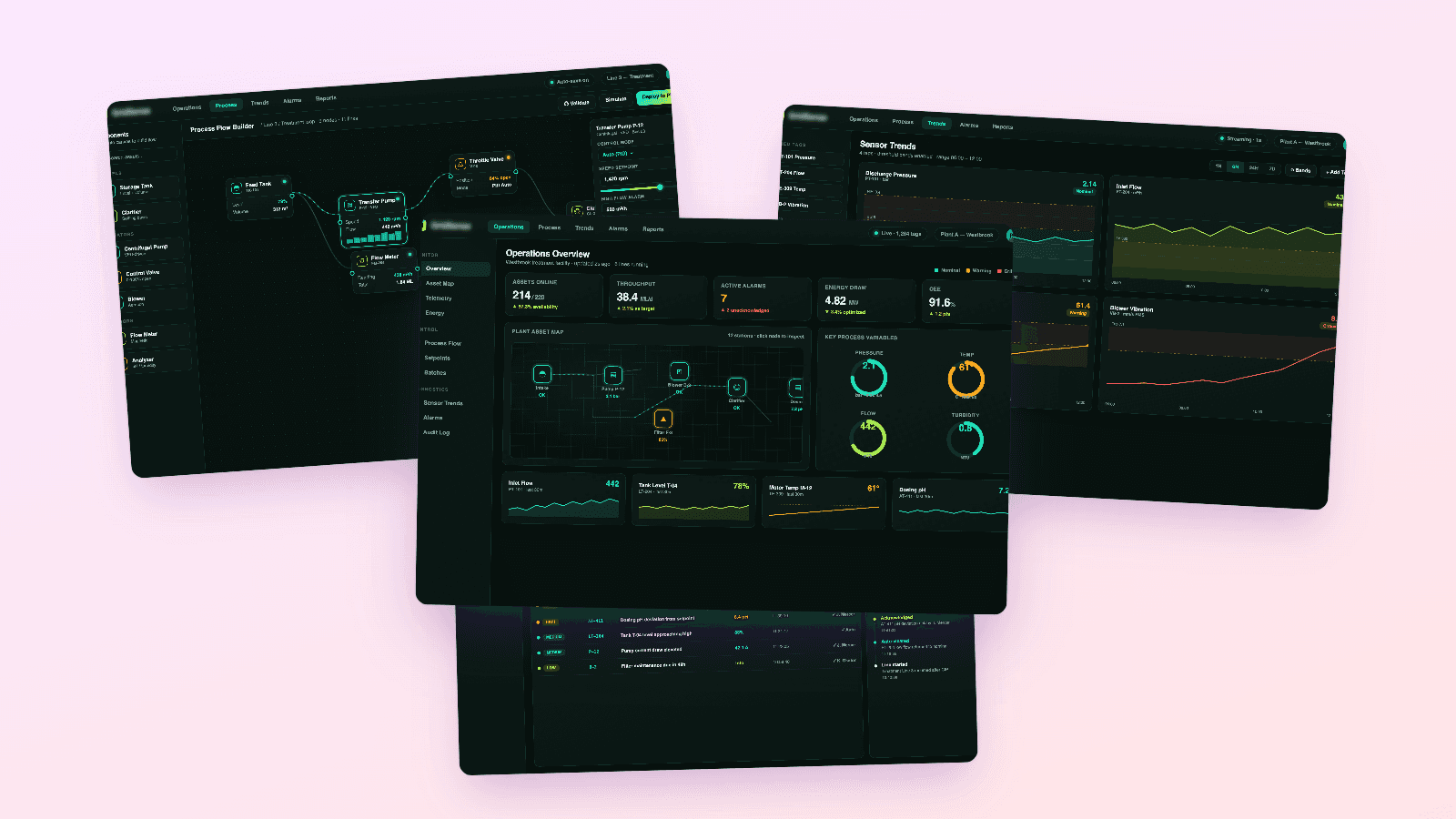
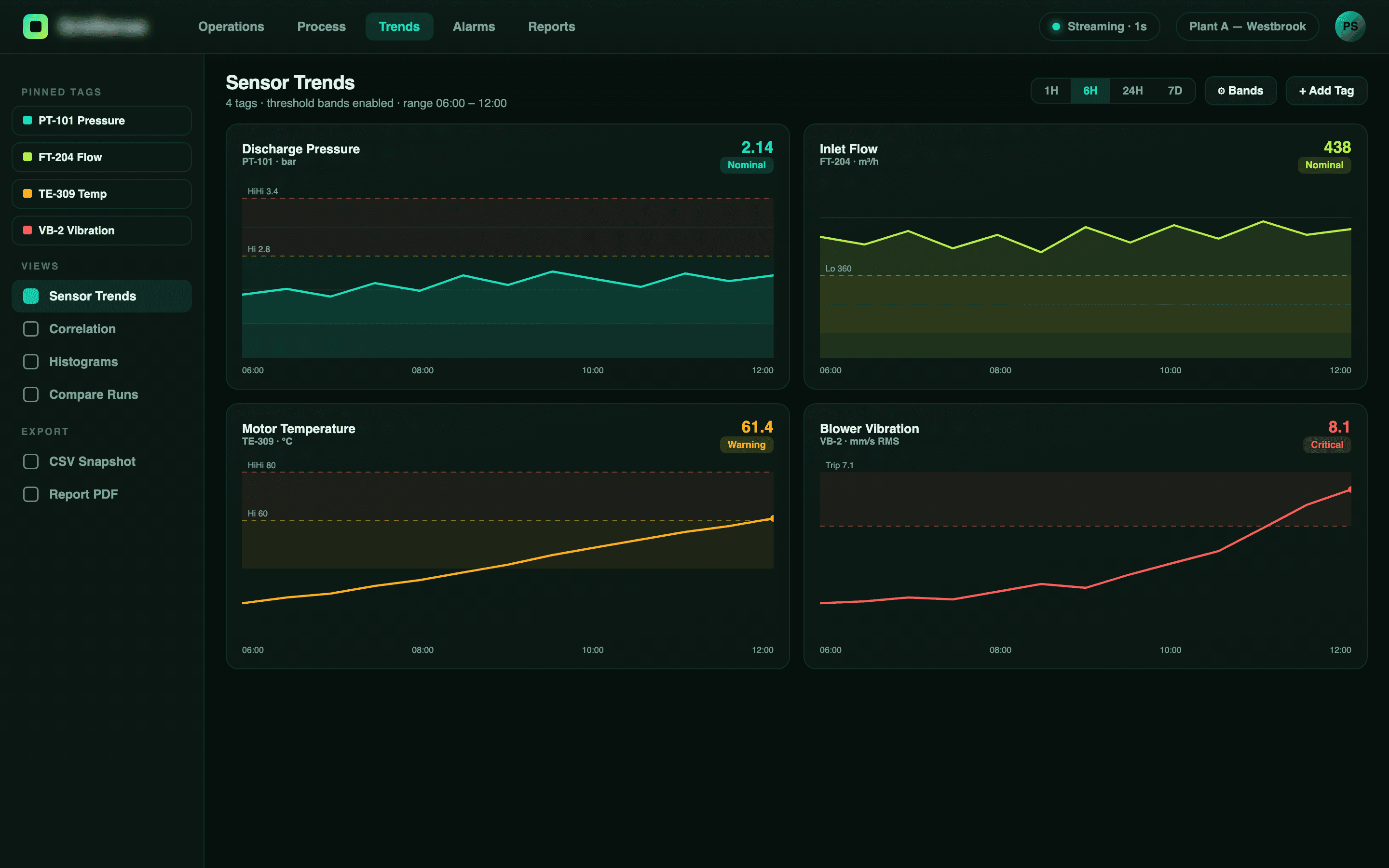
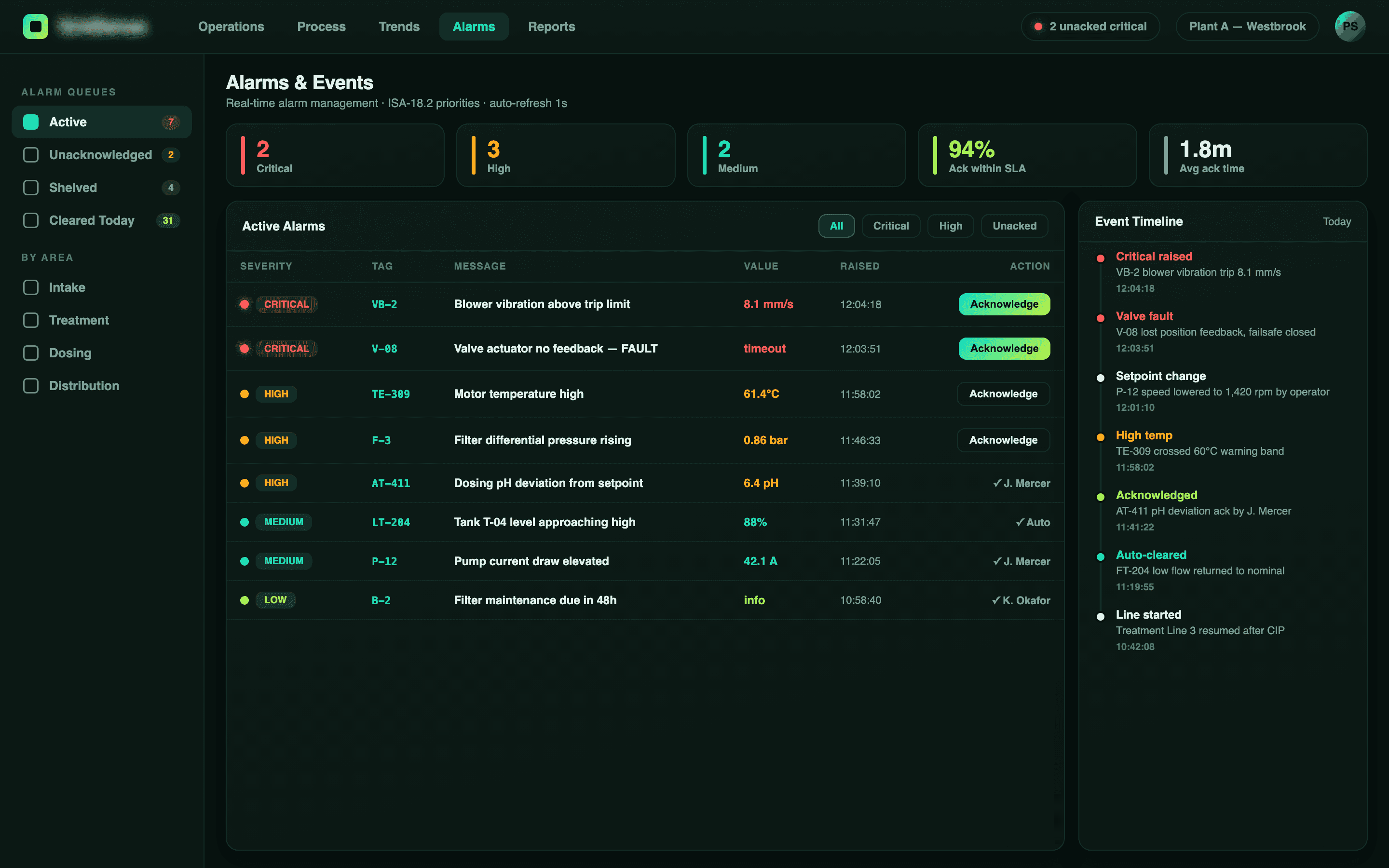
Real-Time Telemetry
Live device data streams into operator-facing dashboards.
High-Concurrency Go Backend
Built for continuous, high-frequency IoT data streams.
Interactive Process Views
A React frontend visualizing assets, process flows, and live readings.
Schema-Flexible Data Model
New asset types and flow definitions can be added without redeploying.
The architecture was built around keeping those two demands (flexibility and raw throughput) from compromising each other:
- Rather than encoding each plant's assets, sensors, and process flows into the application's source code, the team modeled them as data that the engine reads and interprets at runtime. That inversion means a single engine can serve many different plant layouts, and adapting to a new layout, or a change to an existing one, becomes a matter of updating configuration rather than writing and shipping new code. It is the decision that most directly answers the client's core requirement, letting domain users own the model of their own plant.
- The backend was written in Go specifically for its native concurrency model: goroutines let the system handle many simultaneous incoming telemetry streams without the overhead of dedicating a heavyweight thread to each one, and channels give those goroutines a safe, structured way to pass data between ingestion and distribution. This concurrency-first approach was the mechanism that let the platform actually ingest and fan out real-time streams at the volume industrial telemetry demands.
- The telemetry pipeline that moves live data and the modeling layer that represents assets and process flows were kept as two clearly separated concerns rather than one intertwined system. That separation lets each half be optimized for what it needs: the pipeline stays lean and fast because it is only concerned with moving data, while the modeling layer carries the flexibility and configurability without that overhead ever touching the hot path that live data travels through.
- Between the Go backend and the React front end, the team built a real-time transport layer so that telemetry reaching the backend shows up on operator dashboards with low latency rather than on a delay. That transport had to hold up under sustained load, not just short bursts, since operators watch these dashboards continuously and a system that only performs well in brief spikes would fail the actual use case.
- Operators now watch live industrial telemetry arrive on their dashboards in real time. That immediacy is the core value a SCADA system is supposed to deliver, and it gives floor staff direct visibility into what their equipment and processes are doing as it happens, rather than working from a stale or delayed picture of the plant.
- Because assets and process flows are modeled as data rather than hard-coded, the domain users who actually understand the plant can define and adjust them directly, without a developer in the loop. When the plant layout evolves (a new asset, a changed process flow) that no longer triggers an engineering cycle; it is absorbed as a configuration change instead. That is a direct reversal of the rigidity that made the original problem worth solving in the first place.
- The concurrency-first Go backend sustains continuous, high-frequency IoT data streams without the responsiveness of the dashboards degrading under that load. Operators keep a live, real-time picture of the plant even while the system is continuously ingesting and fanning out large volumes of sensor data, rather than the platform slowing down or falling behind as volume climbs.
Discovery
Understand the problem, the users, and the real constraints before any design work starts.
Design
Architecture and UX decisions made deliberately, before a line of production code is written.
Build
Iterative development with regular check-ins, so direction can be corrected early and cheaply.
Test
QA and hardening against real-world edge cases before anything reaches production.
Ship & Support
Launch, then stay involved: monitoring, fixes, and iteration as the product keeps growing.