Subscription Financial News Platform
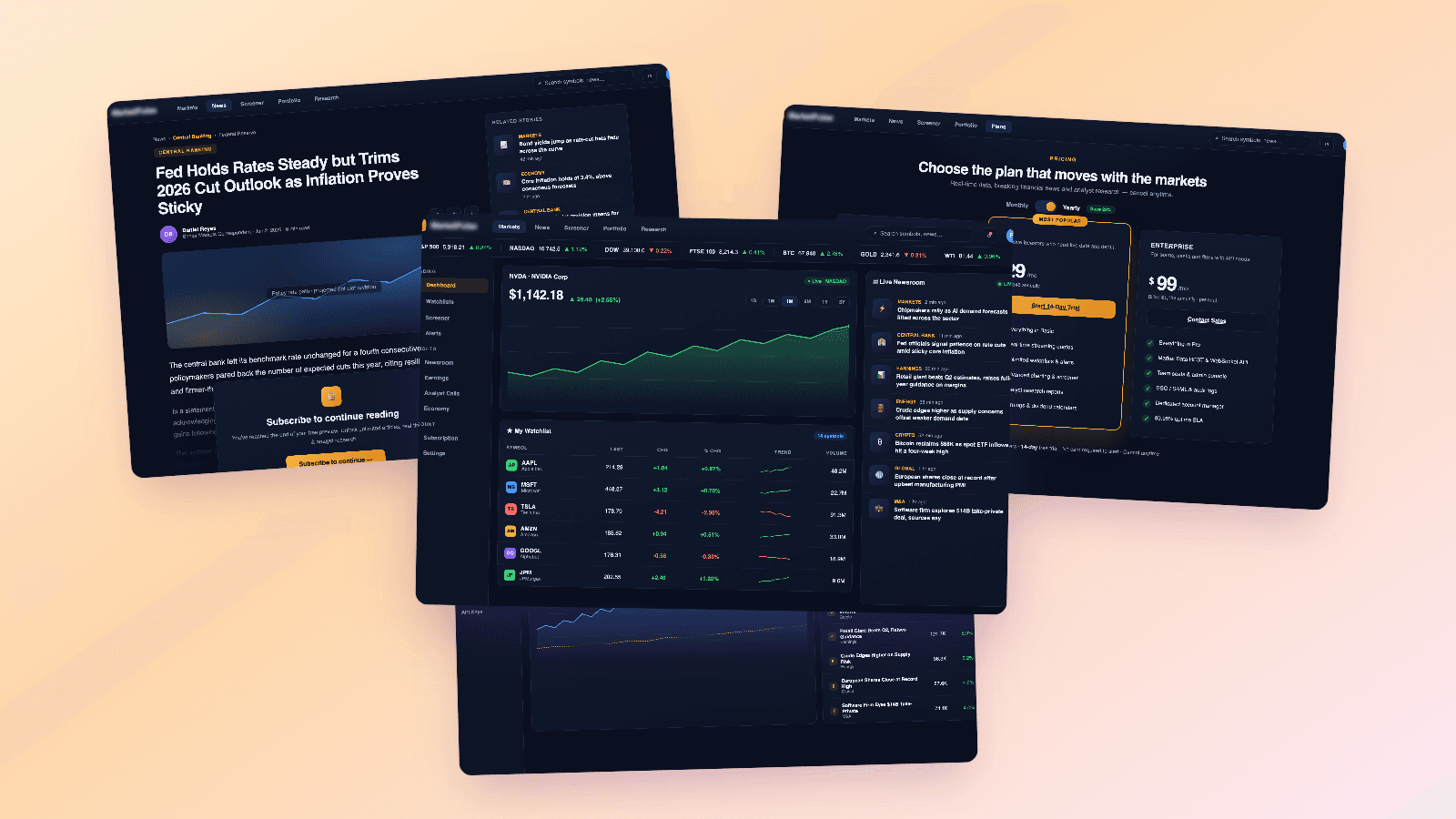
The client is a financial media business whose core product is a real-time news and market data dashboard, sold to subscribers who pay specifically for timely, accurate information. Because the offering sits behind a subscription paywall, the relationship between the platform's technical health and its revenue is direct and unforgiving: a subscriber pays to see market-moving news and price data as it happens, and any lag between an event occurring and it appearing on the dashboard erodes the reason they are paying at all. Uptime and freshness are not secondary quality attributes here. They are the product itself, and any degradation in either one shows up immediately as a reason to cancel.
That dependency plays out under continuous, heavy load rather than in occasional spikes. The dashboard has to keep taking in a steady stream of updating content (news items, market data ticks, and the underlying feeds that drive them) and keep rendering it responsively for a paying audience that expects the page to behave the same at any hour, not just during a quiet period. Layered on top of that constant ingestion is the need to serve different tiers of access correctly, so the platform also has to reconcile who is entitled to see what with the same responsiveness it owes to raw content delivery. None of these pressures let up; the system has to hold its behavior under sustained, everyday traffic, not just survive a rare peak.
A single monolith could not satisfy that combination of demands. Content delivery, market data processing, subscription and access logic, and the delivery layer itself each have different load patterns, different failure modes, and different reasons to change over time, and a monolith forces all of them to scale together, fail together, and ship on the same release schedule. What the platform actually needed was the ability to scale each concern independently, isolate failures so a problem in one area didn't take down the rest, and release changes to one part of the system without forcing a redeploy (and re-test) of everything else.
Live Market Dashboard
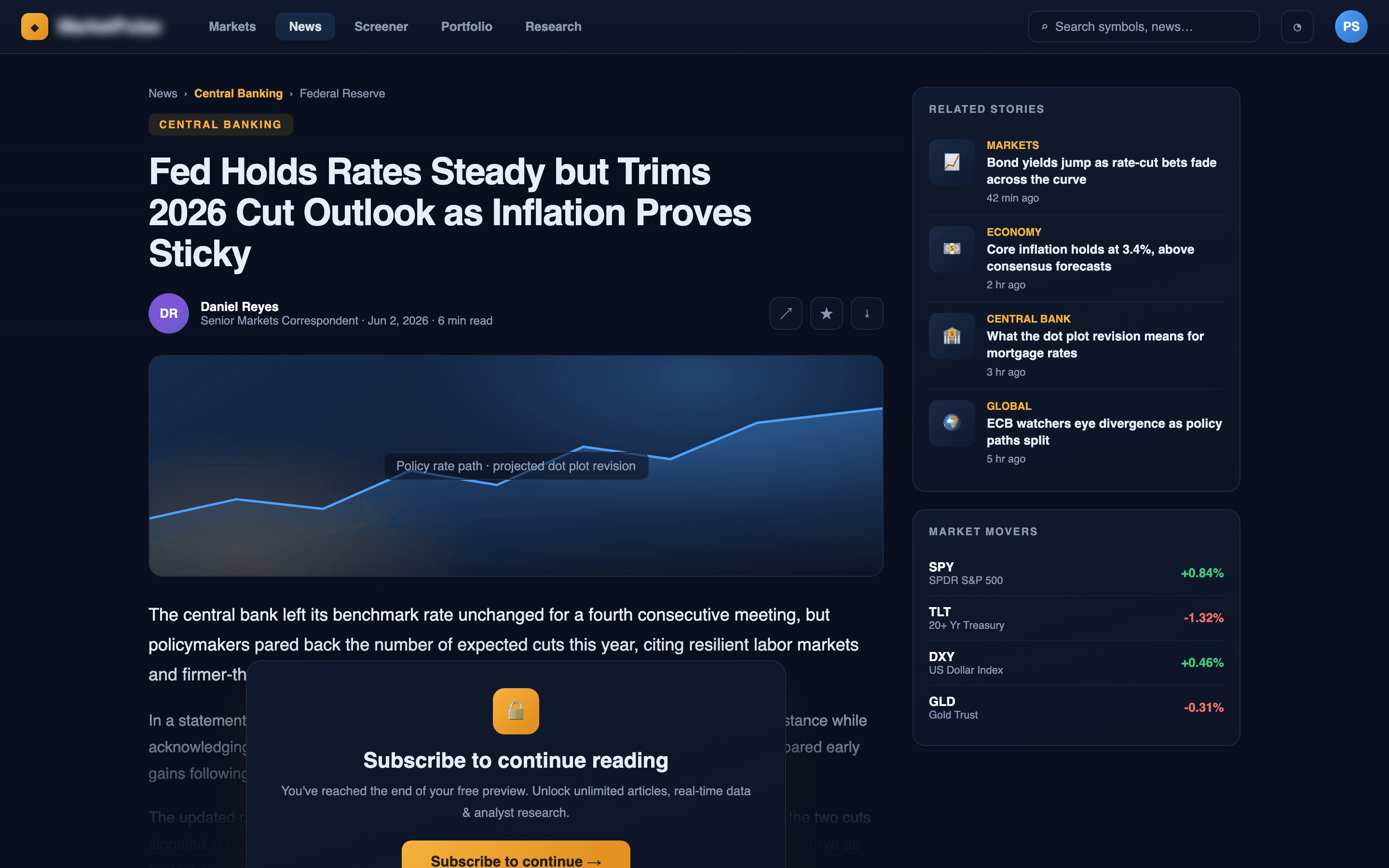
A dynamic news and market data dashboard with live-updating content for subscribers.
Subscription & Paywall
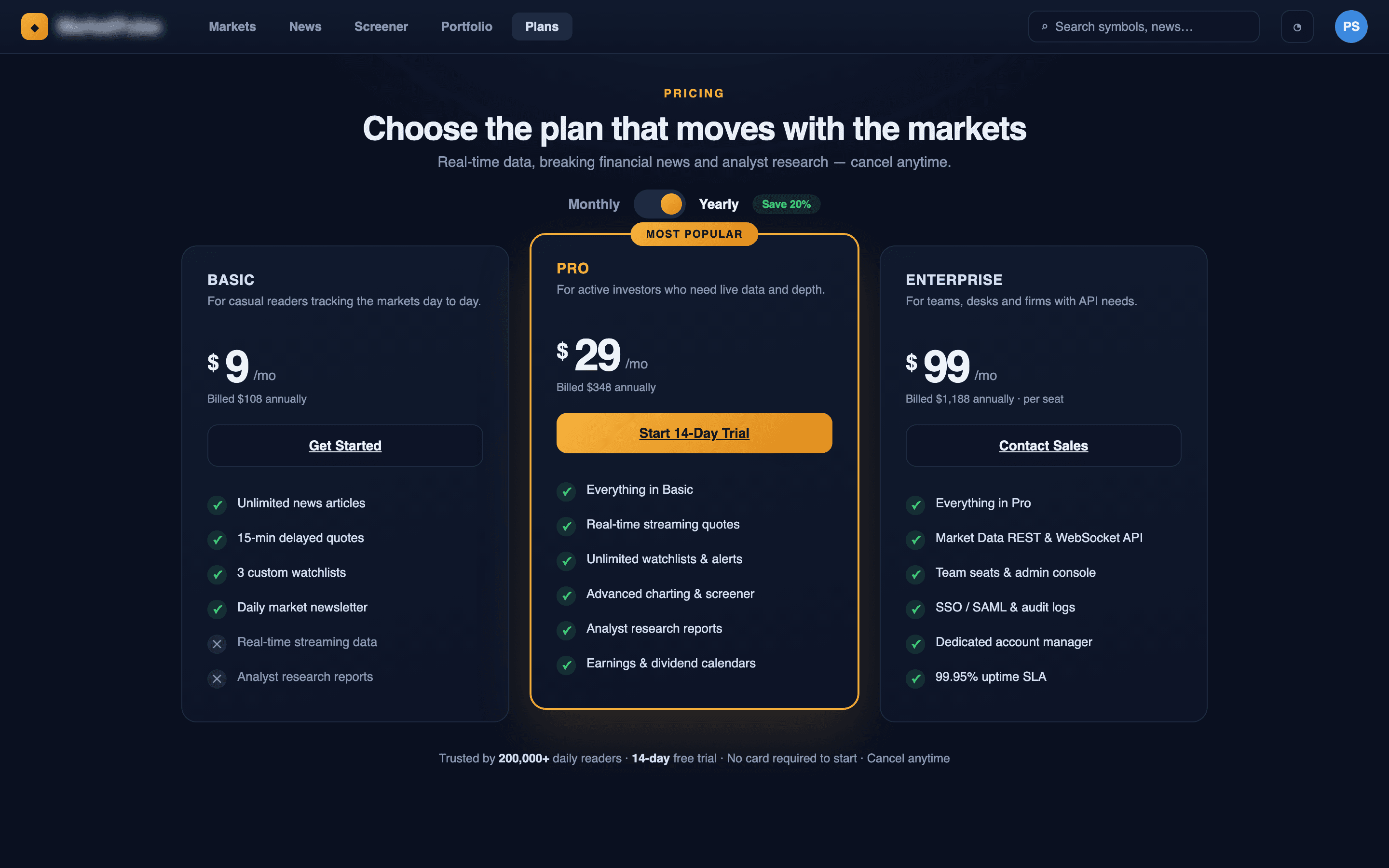
Paywalled, tiered content delivery built into the access model.
Microservice Backend
Content, data, and user concerns split into independently deployable services.
Server-Rendered Frontend
A Next.js frontend delivering a fast, server-rendered dashboard experience.
End-to-End Observability
Centralized logging and observability via Coralogix across every service.
The architecture and delivery approach were built directly around the constraints above:
- The platform was split into a microservice architecture so that content, market data, subscriptions, and delivery could each scale and ship independently rather than being tied to one another's release schedule. This separation meant a spike in market data volume, for instance, did not force the subscription or delivery services to scale in lockstep, and a change to one service's logic could go out without requiring a full-platform redeploy. It directly addressed the core limitation of a monolith identified in the challenge: the inability to isolate and independently manage the different concerns driving the dashboard.
- The system was built to absorb high, sustained daily traffic without the dashboard experience degrading for subscribers actively using it. Because freshness and responsiveness are what subscribers are paying for, the engineering target was not just to survive traffic but to keep serving it at the same quality continuously, rather than treating heavy load as an occasional condition to be weathered. This meant designing for the platform's typical everyday volume as the baseline expectation, not as a stress case.
- Every service was containerized with Docker so that deployments stayed consistent and repeatable across environments. In a microservice system with multiple independently shipping services, environment drift between development, staging, and production is exactly the kind of problem that erodes the independent-release benefit the architecture was chosen for, and containerization closed that gap by ensuring each service ran the same way wherever it was deployed.
- The platform was deployed across both AWS and GCP, a multi-cloud approach chosen deliberately rather than settling on a single provider, with Coralogix observability running throughout the stack. Spreading the deployment across two clouds supports the isolation and independence goals of the architecture at the infrastructure level, and pairing that with centralized observability meant the team could still see what was happening across every service and every cloud from one place, rather than losing visibility as the system spread out.
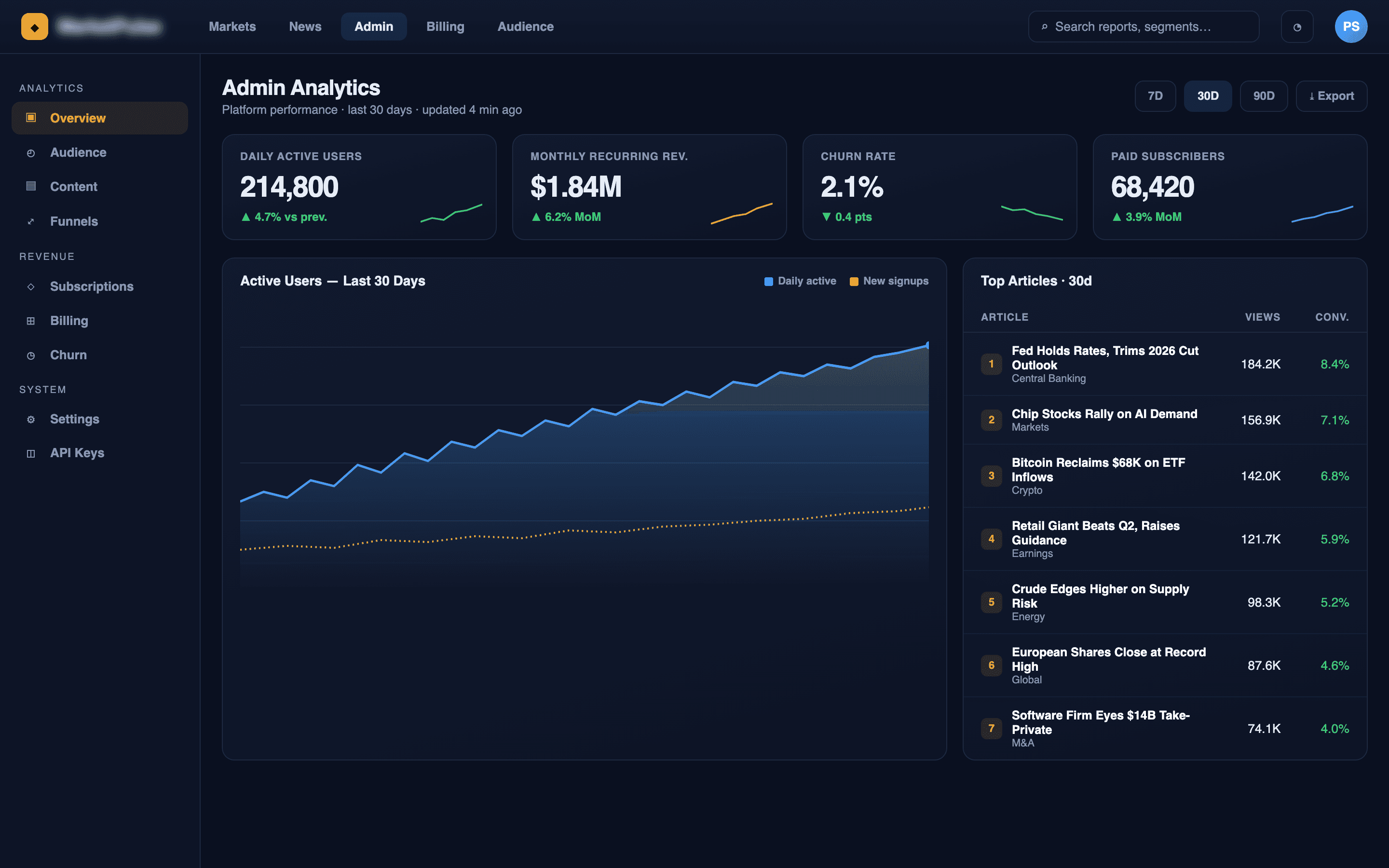
- The platform now serves more than 200,000 active users every day on a subscription model, which means the architecture is carrying real, continuous paying-customer load rather than a theoretical capacity figure. That daily active number is the direct proof point for the "heavy, continuous traffic" the system was built to absorb. It is the traffic the platform actually sees, day in and day out, from an audience whose subscriptions depend on the dashboard staying fast and current.
- Because the microservice design lets content, market data, subscriptions, and delivery scale and deploy independently, the platform stays stable even though it is revenue-critical and cannot afford broad outages. Teams can ship changes to one service, or scale it up in response to its own load pattern, without putting the rest of the platform (and the subscription revenue riding on it) at risk. That independence is what turns the architectural decision from the approach phase into an operational outcome: the system behaves the way it was designed to under real conditions.
- Centralized observability through Coralogix gives the team fast, cross-service visibility instead of having to piece together what's happening from separate, siloed views into each service or each cloud. In a subscription business where uptime and freshness are what customers are paying for, being able to spot and diagnose an issue quickly across the whole system (rather than after it has already affected paying subscribers) is what turns observability into a direct protector of retention and revenue, not just an operational nicety.
Discovery
Understand the problem, the users, and the real constraints before any design work starts.
Design
Architecture and UX decisions made deliberately, before a line of production code is written.
Build
Iterative development with regular check-ins, so direction can be corrected early and cheaply.
Test
QA and hardening against real-world edge cases before anything reaches production.
Ship & Support
Launch, then stay involved: monitoring, fixes, and iteration as the product keeps growing.